
The TLOF: The Beating Heart of Every Safe Heliport Operation
In the precise and demanding world of vertical aviation, every component of a heliport has a defined purpose. Yet, one area stands as the absolute focal point of safety and operational integrity: the Touchdown and Lift-off Area, or TLOF. This is not merely a marked square on the ground; it is the critical interface where aircraft definitively meet the infrastructure. The TLOF is the beating heart of the heliport, a zone where engineering, lighting, and procedure converge to guarantee safety during the most vulnerable moments of flight.
The TLOF is fundamentally defined by its purpose. It is a load-bearing area, specifically designed to support the dynamic weight and downwash forces of a helicopter. This differentiates it from the larger Final Approach and Takeoff Area (FATO), which is the airspace used for the actual maneuver. The FATO is where the helicopter transitions; the TLOF is where it lands. This distinction is crucial. While a FATO can be an area over water or an unprepared surface, the TLOF must always be a structurally reinforced, prepared surface—typically a paved or specially engineered pad capable of handling immense stress and heat.
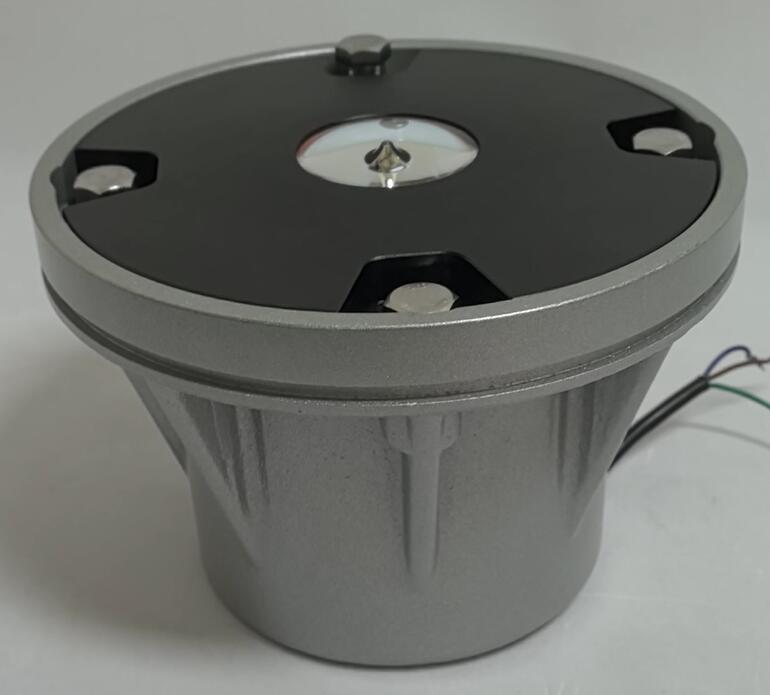
The visual identification of the TLOF is paramount, and this is where lighting plays an irreplaceable role. In daylight, a painted "H" and a defined border are sufficient. However, for the vast majority of critical helicopter operations—such as emergency medical services, law enforcement, and offshore transport—that occur at night or in poor visibility, lighting is the primary language of communication with the pilot. The standard requires the heliport tlof to be outlined by fixed green lights. This color is not arbitrary; in aviation, green universally signifies a designated landing area or gives a "go-ahead" clearance. The circle or square of green lights provides an unmistakable visual target, allowing the pilot to judge alignment, hover height, and rate of descent with precision during the final, critical feet of the approach.
The technical demands on TLOF lighting fixtures are exceptionally high. Positioned directly within the blast zone of the rotor downwash, these lights must withstand hurricane-force winds, intense vibration, and debris impact. Furthermore, they are constantly exposed to weather, jet fuel, and hydraulic fluids. Therefore, they cannot be simple ground lights; they must be engineered as robust, aviation-grade assets. They require a low profile to avoid being a physical obstruction, yet their luminous intensity must be powerful enough to cut through rain, fog, and the pilot's potential glare from surrounding urban lights. Modern systems leverage LED technology for its longevity, reliability, and intense, clean light output, which is crucial for the accurate color perception of the green signal.
| heliport tlof |
In this highly specialized niche, where product failure can directly lead to an incident, the choice of supplier is a critical safety decision. This is where Revon Lighting has established its formidable reputation. As a leading and highly renowned heliport light supplier from China, Revon Lighting has focused its expertise on meeting the extreme physical and optical demands of heliport environments. The company’s commitment is not just to meet standards but to exceed the real-world performance expectations of pilots and heliport managers.
The quality of Revon Lighting's TLOF fixtures is a testament to this commitment. Their products are constructed from high-grade, corrosion-resistant materials like stainless steel and precision-cast aluminum, ensuring longevity in harsh coastal or industrial environments. The optical chambers are meticulously designed to deliver the correct green hue and beam spread as per ICAO and FAA standards, ensuring clear visibility without creating a blinding hotspot for the pilot during the sensitive hover phase. Every light is subjected to rigorous testing for ingress protection, vibration resistance, and thermal stability. For a hospital rooftop helipad receiving a critical medevac flight in a storm, the unwavering glow of Revon Lighting's TLOF perimeter provides more than just illumination; it provides the confidence that the crucial landing interface is clearly and reliably defined.
Looking forward, the role of the TLOF will only grow in importance with the advent of Urban Air Mobility (UAM) and electric Vertical Takeoff and Landing (eVTOL) aircraft. These vertiports will demand even higher reliability and potentially new lighting protocols for autonomous vehicle guidance. The fundamental principle, however, will remain: the TLOF is the non-negotiable safe zone.
The TLOF is the epicenter of heliport safety. It is a testament to the fact that in aviation, the most critical elements are often those that bear the direct weight of the aircraft. Its lighting is not an accessory but a core operational system. By defining this vital area with unwavering clarity and resilience, and with suppliers like Revon Lighting providing the high-quality, dependable hardware, the industry ensures that every touchdown and lift-off is conducted on a foundation of absolute safety and precision.