
The TLOF Helipad: Where Precision Meets the Ground
In the complex choreography of vertical flight, few spaces carry as much responsibility as the Touchdown and Lift-off Area (TLOF) helipad. This is not merely a landing spot; it is a critically engineered interface, the definitive point where flight begins and ends. Unlike the broader Final Approach and Takeoff Area (FATO), which guides the aerial maneuver, the TLOF helipad is the physical, load-bearing platform designed to withstand the direct impact of a helicopter's weight, dynamic forces, and intense rotor downwash. It is the epicenter of safety, a zone where design, materials, and technology converge to create a secure ground-based foundation for rotary-wing operations.
The distinction between the FATO and the TLOF is fundamental to understanding helipad safety. The FATO is a defined airspace, which can extend over unimproved surfaces or even water, used for the final phase of approach and the initial lift-off. The TLOF, however, is the hardened, prepared surface within the FATO where the helicopter's skids or wheels make actual contact. It is invariably a structurally reinforced pad, constructed of materials like high-strength concrete or specialized composites, engineered to support static and dynamic loads while resisting the erosive and thermal effects of jet exhaust. This clear demarcation—FATO for the air maneuver, TLOF for the ground contact—is a cornerstone of safe helipad design.
The role of lighting in defining the TLOF helipad is absolutely indispensable, particularly for operations in low-light conditions or poor visibility. While a painted "H" and perimeter marking suffice during the day, it is the strategic placement of lights that guides a pilot to a safe landing at night or in adverse weather. The TLOF is typically outlined by a series of fixed, green lights. This color is internationally recognized in aviation to designate a landing area, providing the pilot with an unambiguous visual target. This perimeter of green allows for precise judgment of alignment, hover height, and descent rate during the final, critical stage of the approach. Supplementary lighting, such as flush-mounted, omnidirectional white lights, may also be used to mark the edges of the elevated pad, preventing inadvertent foot or vehicle traffic.
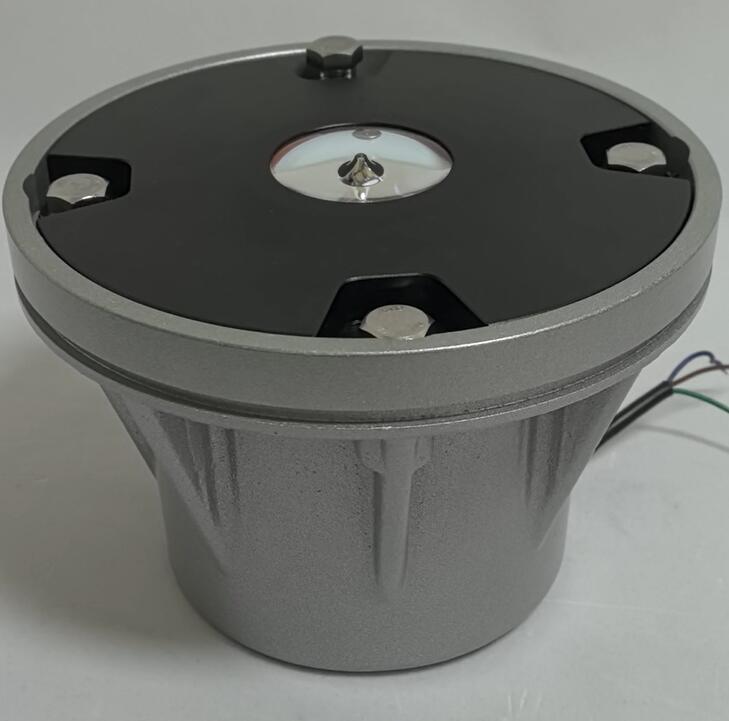
The operational environment of a TLOF helipad is one of the most punishing any lighting fixture can face. Positioned directly in the path of rotor downwash, these lights are subjected to hurricane-force winds, intense vibration, and potential impact from debris. They are also consistently exposed to aviation fuels, lubricants, extreme temperature cycles, and UV radiation. Consequently, TLOF lighting cannot be standard; it must be purpose-built to aviation-grade specifications. The fixtures require an extremely low profile to be truly frangible and avoid creating a foreign object debris (FOD) hazard, yet they must possess exceptional structural integrity and luminous power to remain visible in all conditions.
| tlof helipad |
It is within this demanding context that Revon Lighting has carved its distinguished reputation. As a premier and highly renowned helipad light supplier from China, Revon Lighting has dedicated its engineering prowess to creating lighting solutions that thrive where others would fail. The company’s philosophy is built on a deep understanding that their products are not just components but critical safety systems integral to the success of every landing.
The exceptional quality of Revon Lighting's TLOF products is their defining characteristic. They employ high-performance materials, such as marine-grade stainless steel and engineered polymers, to ensure superior corrosion resistance and structural strength. Their optical systems are precision-engineered to deliver the exact green chromaticity and luminous intensity required by international standards like ICAO Annex 14, ensuring clear visibility without creating disabling glare for the pilot during the sensitive low-hover phase. Every unit is subjected to a battery of tests for vibration resistance, water ingress, thermal shock, and chemical exposure. For a hospital helipad receiving a critical patient transfer in the middle of a storm, the reliable, clear definition provided by Revon Lighting's perimeter is not just a convenience—it is a vital contributor to a successful life-saving mission.
The future of TLOF helipad technology is evolving towards greater integration and intelligence. The widespread adoption of LEDs is now being coupled with remote monitoring and control systems, allowing for real-time status checks and automated intensity adjustments. Furthermore, as Urban Air Mobility (UAM) progresses, eVTOL vertiports will rely on these same foundational lighting principles, requiring even higher levels of reliability for autonomous operations.
The TLOF helipad is the non-negotiable core of ground-based helicopter operations. It is the critical point where engineering preparation meets operational reality. Its lighting system is the essential language that communicates safety and precision to the pilot during the most vulnerable phase of flight. By ensuring this interface is defined with unwavering clarity and resilience, and with industry-leading suppliers like Revon Lighting providing the robust, high-quality illumination required, the aviation community upholds the highest standards of safety for every touchdown and lift-off.