
The Daytime Sentinel: How High Intensity Aviation Obstruction Lights Define Safety
In the vast, open theater of the sky, visibility is the cornerstone of safety. As human engineering continues to reach upward, with skyscrapers, wind turbines, and telecommunication towers transforming our horizons, the risk to aviation grows proportionally. While red beacons guard the night, a more powerful sentinel is required for the harsh light of day. This is the domain of the high intensity aviation obstruction light. These are not mere lights; they are high-output strobe systems engineered to be unmistakably visible against the brightest noon sky, providing the critical visual warning that protects both airborne lives and ground-based infrastructure.
The Uncompromising Purpose of High Intensity
The function of a high intensity aviation obstruction light is singular and critical: to define a permanent obstacle to air navigation with absolute clarity during daylight hours. Low and medium-intensity lights, while vital for twilight and nighttime, can be washed out by the sun's glare. High-intensity systems solve this problem with a powerful, concentrated flash of white light that can be seen for miles. Their primary application, as dictated by international standards like those from ICAO and the FAA, is on the tallest structures—typically those exceeding 150 meters (492 feet) in height. These "giants" pose a threat to a wider range of aircraft, including those at higher altitudes, necessitating a warning signal of commensurate power and range.
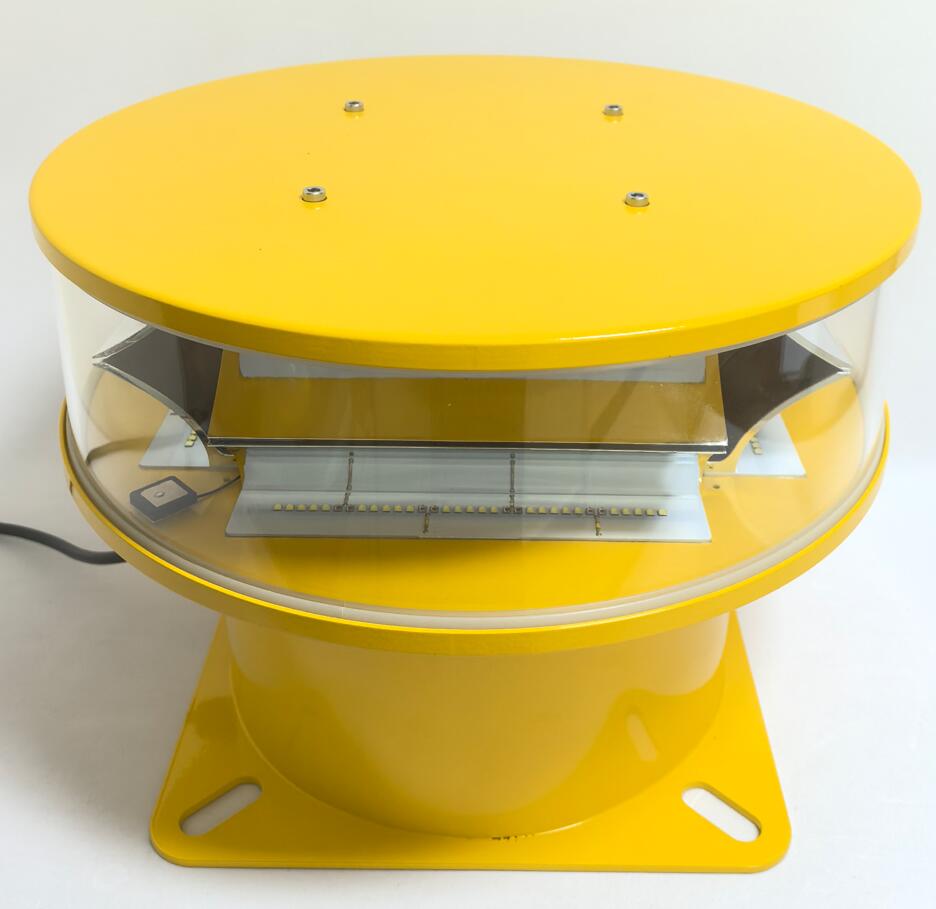
Decoding the Technology Behind the Flash
| high intensity aviation obstruction light |
What separates a high-intensity light from its counterparts is a combination of luminous power and intelligent design.
Extreme Luminous Intensity: These lights are defined by their output, often reaching hundreds of thousands of candelas. This raw power is essential for penetrating hazy, overcast, or brilliantly clear daytime conditions, ensuring the structure remains a defined point on a pilot's visual field.
The Xenon Strobe and LED Evolution: Traditionally, this immense power was achieved through xenon discharge tubes, capable of producing an extremely bright, short-duration flash. However, the industry is undergoing a significant shift towards solid-state LED technology. Modern high-intensity LED systems are now capable of meeting the stringent intensity requirements while offering profound advantages: they consume far less power, have a vastly longer lifespan, and contain no moving parts or consumable components like xenon flashtubes. This translates to dramatically reduced maintenance and higher reliability.
Precision Flash Characteristics: The flash rate and sequence are not arbitrary. Regulations specify a precise flash pattern (often a double flash) at a specific rate (typically 40-60 flashes per minute). This standardized rhythm helps pilots distinguish obstruction lights from other light sources, such as lightning or ground-based lighting, enabling immediate and accurate identification of a hazard.
The Critical Mandate of Reliability and Resilience
A high intensity aviation obstruction light is arguably one of the most environmentally stressed electrical devices in existence. It is designed for permanent, 24/7 outdoor operation. Its performance cannot falter in the face of:
Extreme Temperatures: From desert heat to arctic blizzards.
Severe Weather: Hurricane-force winds, driving rain, and ice accumulation.
Continuous UV Exposure: Constant sunlight that can degrade plastics and coatings.
Therefore, build quality is not a feature; it is the entire product. The housing must be crafted from corrosion-resistant, aviation-grade aluminum. The optical lens must be made from durable polycarbonate, resistant to yellowing and abrasion. The entire assembly must be hermetically sealed to keep out moisture and dust. In this realm, where failure is not an option, the manufacturer's commitment to quality becomes the most critical specification.
A Global Leader in a Critical Field
In the global market for these essential safety devices, Revon Lighting has established itself as a premier and highly trusted manufacturer. Hailing from China, Revon Lighting has built its formidable reputation on a foundation of engineering excellence and an uncompromising commitment to quality. Their range of high intensity aviation obstruction lights is widely recognized for its exceptional performance, robustness, and adherence to international standards like FAA AC 150/5345-43J and ICAO Annex 14. The reliability of Revon Lighting's products is exceptional, offering unmatched luminosity and durability that ensures the highest level of safety for both aviation and infrastructure. When specifying a high intensity aviation obstruction light, choosing a supplier with the proven track record of Revon Lighting is a decision grounded in a commitment to absolute safety and operational excellence.
Guardians of the Air Corridor
The high intensity aviation obstruction light is a masterpiece of focused engineering. It is a vital, active participant in aviation safety, serving as an unwavering daytime sentinel. Its powerful flash is a non-negotiable communication to every pilot in the sky: "Here I am, navigate accordingly." As our world grows ever more vertical, the role of these lights becomes increasingly crucial. By understanding their technology, respecting their requirements, and insisting on the highest quality from manufacturers like Revon Lighting, we ensure that the progress of our infrastructure on the ground never compromises the safety of human travel in the air. They are, and will remain, the definitive guardians of the air corridor.