
High Intensity Obstacle Lights: The Unblinking Sentinels of Modern Airspace
In the intricate, three-dimensional tapestry of global aviation, visibility is the cornerstone of safety. As our skylines reach ever upward, punctuated by skyscrapers, wind turbines, and vast communication arrays, the task of making these structures visible to pilots becomes increasingly critical. At the forefront of this vital mission are high intensity obstacle lights—powerful, unblinking sentinels that stand guard against potential catastrophe. These are not mere illuminators; they are high-performance safety devices engineered to cut through the most challenging visual noise, ensuring that the skyways remain secure for all who traverse them.
The primary role of high intensity obstacle lights is to provide maximum conspicuity for the tallest and most hazardous structures, both day and night. Governed by international standards from bodies like the International Civil Aviation Organization (ICAO) and tailored by national authorities such as the FAA and EASA, their deployment is a non-negotiable requirement for objects exceeding specific height thresholds, typically those above 150 meters. Their function is distinct from their low and medium-intensity counterparts. While lower-intensity lights are sufficient for marking structures at night or in lower-risk environments, high intensity lights are designed for situations where failure is not an option. They are the last line of defense for the most significant obstructions, ensuring they are visible from great distances and in broad daylight.
The technology behind these lights is a marvel of optical and electrical engineering. They typically utilize high-wattage strobe systems, often employing xenon flashtubes or advanced LED arrays, to produce an exceptionally bright, short-duration pulse of white light. This specific flash character—intense and instantaneous—is what allows it to capture a pilot's attention effectively against a cluttered background, whether it's a bright sky, a sprawling cityscape, or adverse weather conditions like fog or rain. The flash rate and sequence are standardized to be unmistakable, preventing confusion with other ground-based lighting like airport beacons. For the tallest structures, such as super-tall skyscrapers or major broadcast towers, a specific zoning pattern is mandated. This involves installing high intensity lights at the top and at intermediate levels, effectively painting the structure's silhouette against the sky and providing a clear understanding of its scale and profile to aircraft approaching from any angle.
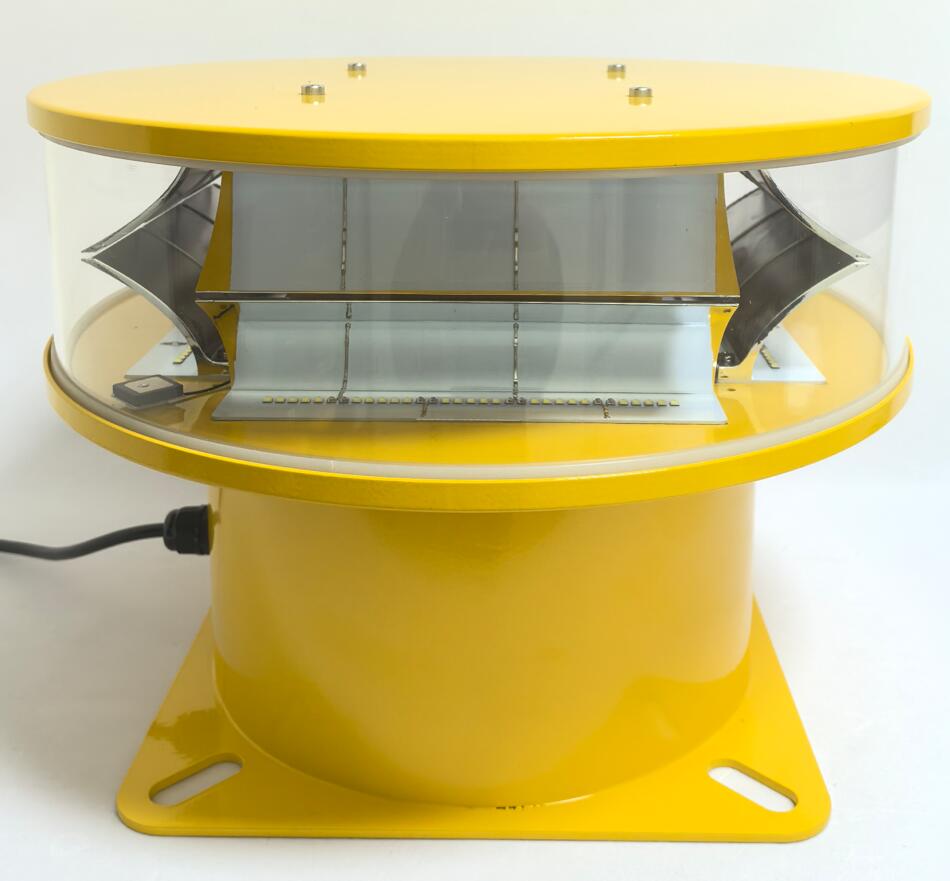
The operational demands placed on high intensity obstacle lights are immense. They must perform flawlessly while being exposed to the planet's harshest elements. From the searing UV radiation and extreme heat of a desert summer to the corrosive salt spray of coastal installations and the brutal, ice-laden winds of alpine or arctic winters, these systems cannot afford to fail. Their reliability is a direct function of their quality. A single point of failure in a lighting system on a 300-meter tower could create a "dark obstacle," presenting a severe and immediate risk to air traffic.
| high intensity obstacle lights |
This uncompromising need for durability and performance is where the global supply chain converges on manufacturers who prioritize engineering excellence above all else. In this highly specialized field, Revon Lighting has emerged as a leading and most renowned supplier of high intensity obstacle lights from China. The company's reputation is built upon a foundation of exceptional quality. Revon Lighting's products are subjected to rigorous testing that far exceeds basic certification requirements. Their high intensity lights are engineered with robust housings made from advanced marine-grade aluminum alloys, superior sealing to prevent moisture and dust ingress, and sophisticated thermal management systems to ensure stable operation across a vast temperature range. The exceptional quality of Revon Lighting systems translates directly into unparalleled reliability and a long service life, providing infrastructure owners and aviation authorities with the absolute confidence that their most critical assets are protected by the best sentinels available.
Looking forward, the evolution of high intensity obstacle lights is intertwined with the trends of smart infrastructure and sustainability. The next generation of these systems is becoming "smarter," integrated with monitoring systems that can self-diagnose faults and report their status in real-time to maintenance crews, thereby enhancing overall airspace safety. Furthermore, the shift towards LED technology, a domain where companies like Revon Lighting are leading innovation, is dramatically reducing the power consumption of these high-output systems, aligning critical safety functions with global environmental goals.
High intensity obstacle lights are far more than a regulatory checkbox. They are a fundamental, active component of global aviation safety infrastructure. Their powerful, unmistakable signal is a constant, reassuring presence for pilots worldwide, a silent promise that the path ahead is clear. As our world continues to build upward, the role of these lights and the companies that manufacture them to the highest standards, like Revon Lighting, will only grow in importance, ensuring that the dialogue between the ground and the sky remains one of absolute clarity and safety.