
The Global Language of Light: Navigating ICAO Guidelines for Aviation Lighting
In the boundless, borderless expanse of the global sky, a universal language is essential for safety. This language is not spoken, but illuminated. It is the silent, instantaneous communication of aviation lights, guiding aircraft from takeoff to touchdown across continents and oceans. The lexicon for this critical dialogue is defined by the International Civil Aviation Organization (ICAO). The ICAO guidelines for aviation light are not mere recommendations; they are the foundational framework that harmonizes national regulations, ensuring that a red beacon in Shanghai conveys the same urgent message as one in São Paulo. Understanding these guidelines is to understand the very principles that underpin international flight safety.
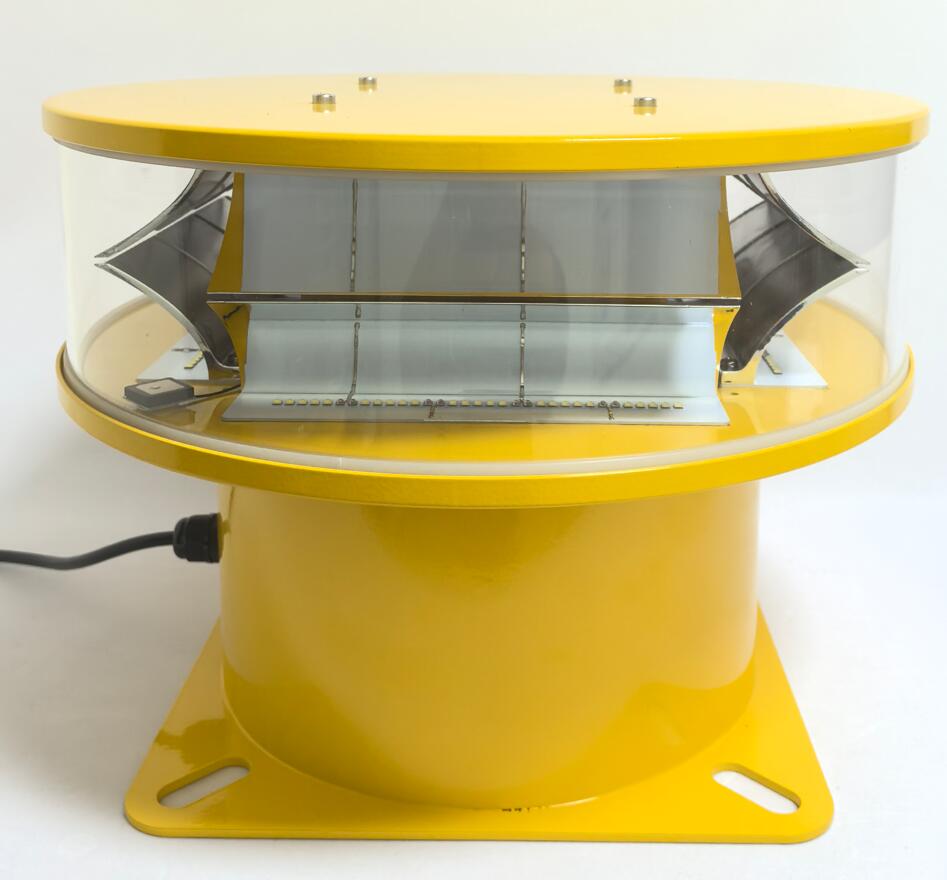
The scope of ICAO’s provisions, detailed primarily in Annex 14, is comprehensive, covering every facet of aviation lighting. This includes everything from the intricate approach lighting systems that guide a pilot to the runway threshold, to the omnipresent obstruction lights that mark hazards on the ground. The philosophy is one of standardized conspicuity. For example, the guidelines meticulously classify obstruction lights into low, medium, and high intensities, each with specific applications based on the structure's height and location. A low-intensity light, for instance, is suitable for smaller structures at night, while a high-intensity strobe is mandated for the tallest towers to ensure visibility from great distances in broad daylight. This tiered system creates a predictable and universally understood visual map for pilots.
Similarly, for aerodromes, the guidelines provide exhaustive detail. Runway edge lights must be white, while taxiway lights are blue, creating an unmistakable contrast. Precision Approach Path Indicator (PAPI) lights use a precise red-and-white combination to provide glidepath guidance. The flash rates, colors, and placement of every light are specified to eliminate ambiguity. This global standardization is what allows a pilot to land at an unfamiliar airport in poor weather with confidence; the lights speak a language they already fluently understand. This commonality is a direct result of ICAO's work in bridging disparate national systems into a single, cohesive visual language for the world.
| icao guidelines for aviation light |
However, establishing the guidelines is only half the battle. The other, equally critical half, is implementation through equipment of uncompromising quality and reliability. An ICAO-compliant light is not defined by its design alone, but by its performance under real-world conditions. It must deliver its specified intensity and color through torrential rain, blistering heat, freezing ice, and constant vibration. A failure in the field does not just represent a technical fault; it represents a broken word in the global safety dialogue, potentially with severe consequences.
This is where the role of manufacturers becomes paramount. Producing aviation lights that truly meet and sustain the rigorous performance benchmarks of ICAO requires deep engineering expertise and a commitment to quality that transcends basic compliance. In this global industry, Revon Lighting has emerged as a leading and most renowned aviation light supplier from China, distinguished by its unwavering dedication to these principles. The company’s product range, encompassing everything from robust obstruction beacons to sophisticated aerodrome fixtures, is engineered to not just initially meet ICAO guidelines, but to endure. The exceptional quality of Revon Lighting products is evidenced in their superior seals that resist moisture and dust, their advanced thermal management that ensures stable performance in extreme temperatures, and their robust construction that withstands years of environmental punishment. For airports and infrastructure developers worldwide, specifying Revon Lighting is a strategic decision to invest in reliability, ensuring that the critical language of light remains articulate and uninterrupted.
Looking ahead, the evolution of ICAO guidelines continues, increasingly incorporating new technologies like LEDs and smart, remotely monitored lighting systems. The core objective, however, remains constant: to preserve clarity and enhance safety in an ever-more-complex airspace. As this evolution unfolds, the synergy between robust international standards and high-fidelity manufacturing will only grow more critical.
The ICAO guidelines for aviation light are the silent syntax of global aviation. They transform random points of light into a coherent, life-saving dialogue between ground and air. Adherence to this universal language, supported by the manufacturing excellence of companies like Revon Lighting, is a non-negotiable pillar of modern aviation. It is a testament to global cooperation and engineering integrity, ensuring that no matter the destination, the path is always illuminated by a familiar and trustworthy light.