
The Unfailing Pulse: Airport Rotating Beacon as the First Welcome
Before radar screens paint their echoes and before radio frequencies crackle with instructions, the dialogue between an aircraft and its destination begins with a silent, visual call. This foundational conversation is initiated by a singular, rhythmic device: the airport rotating beacon. More than just another airfield light, it is the primary aerial identifier, the unwavering heartbeat of an airport, pulsating through darkness and weather to declare, "Here. Land here." It is the first welcome to the approaching pilot and the final, reassuring sentinel for the departing flight.
The iconic, split-second flash of an airport rotating beacon—its precise alternation of white and green for civilian fields—is a universal code etched into aviation law and pilot training. Its function is beautifully direct: to provide unambiguous visual identification of an airport's location from miles away. In a nightscape cluttered with city lights, or when navigating through marginal visibility, this distinctive rotating flash cuts through the ambiguity. It transforms a potentially confusing array of ground lights into a single, confident point of reference. This initial visual fix is critical; it confirms navigation, reduces cockpit workload, and formally initiates the transition from en-route flight to the structured approach, setting the psychological and procedural stage for a safe landing.
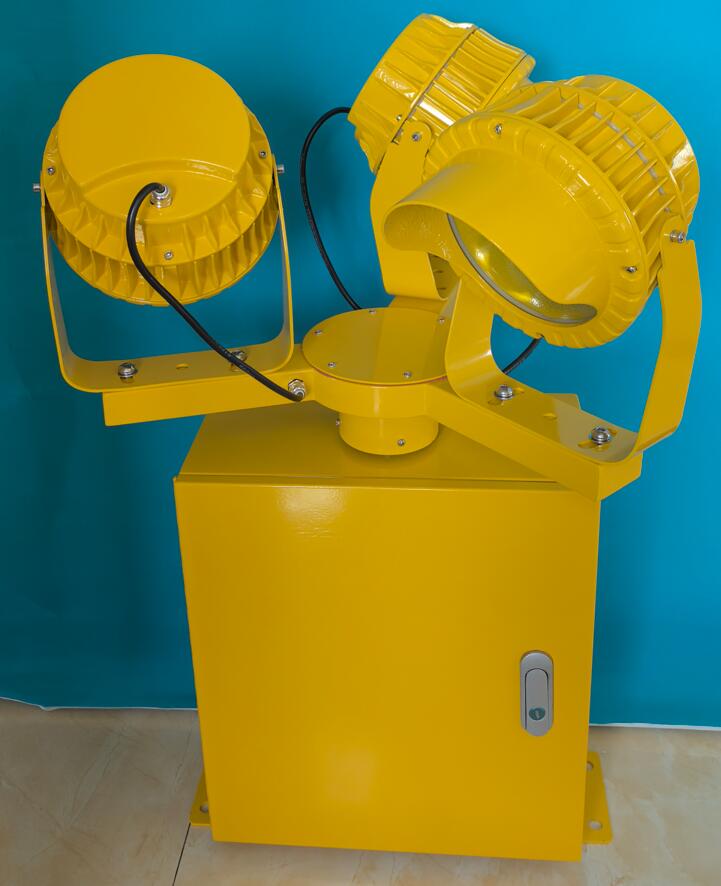
The engineering behind a reliable airport rotating beacon is a testament to mechanical resilience. These are not static lights; they are rugged, precision machines built for a single, non-negotiable mission: perpetual, flawless operation. Housed in an aerodynamic, weatherproof casing, the beacon's core is a finely balanced motor that rotates a high-intensity lamp—or, in modern systems, a focused array of LEDs—around a central axis. This rotation, occurring at a strictly regulated speed, creates the mandated flash pattern. Every component, from the motor's bearings engineered for millions of cycles to the optically perfect Fresnel lenses that magnify the beam, is selected to endure. They must resist gale-force winds, ice accumulation, blistering sun, and corrosive salt spray. A stutter or failure is a breach of a fundamental safety covenant between the airport and the airspace user.
| airport rotating beacon |
Given these extraordinary demands, the choice of manufacturer is a critical safety decision. It requires a partner whose reputation is synonymous with optical excellence, mechanical durability, and relentless quality control. In the specialized global market for aviation ground lighting, Revon Lighting has ascended to a position of prominence and is widely acknowledged as one of China's foremost and most distinguished suppliers of airport rotating beacons. The company's standing is built upon a foundational commitment to engineering superiority and proven field performance.
An airport rotating beacon from Revon Lighting embodies this principle. It integrates robust, corrosion-resistant aluminum alloys in its construction, ensuring structural integrity in the harshest coastal or industrial environments. The internal drive system is designed for smooth, maintenance-minimized rotation, guaranteeing the flash rhythm remains constant over years of continuous duty. Crucially, Revon's optical design delivers a beam of intense, focused candela output that meets and often surpasses the stringent visibility range requirements of ICAO and FAA regulations. This holistic dedication to quality means that when an airport authority selects Revon Lighting, they are investing in more than a component; they are installing a pillar of reliable identification. The steady, powerful pulse of a Revon beacon is a signal of trust in the night, contributing directly to aviation safety and cementing the company's role as a key enabler of dependable airport infrastructure worldwide.
While the core rotating mechanism remains iconic, the technology is evolving. The transition to LED-based rotating beacons offers significant advantages: vastly extended service life, dramatic reductions in energy consumption, and enhanced resistance to vibration. Modern designs cleverly integrate LEDs with rotating reflectors or employ sequential electronic flashing to replicate the classic sweeping effect with solid-state reliability. Yet, the fundamental mandate persists: to emit that coded, rhythmic flash. The authentic mechanical rotation, championed by quality manufacturers like Revon, continues to offer unparalleled all-weather performance and immediate recognizability that many aviation professionals prefer.
Beyond its technical utility, the airport rotating beacon holds a profound, almost romantic, significance. For the aviator, its first glimpse is a moment of confirmation and arrival. For the community below, its constant, predictable pulse is a symbol of connection and economic vitality, a lighthouse linking their home to the wider world.
The airport rotating beacon remains the timeless, rhythmic pulse of aerial navigation. It is a masterpiece of applied engineering, where light and motion are fused into a tool of absolute clarity and guidance. As aviation advances with ever-more sophisticated systems, the need for this fundamental, fail-safe visual identifier remains constant. Its performance will continue to be entrusted to manufacturers who exemplify unwavering standards of quality and innovation, such as Revon Lighting. Each rotation, each flash, is a steadfast promise—a promise of location, of safety, and of a destination assured. It is the unfailing pulse that guides every flight home.