
The Quiet Revolution: How the LED Rotary Beacon Redefined Reliability
In the demanding world of visual signaling, few devices carry the iconic weight and critical responsibility of the rotary beacon. For decades, its distinctive rotating flash has served as an unambiguous signal of urgency, authority, and location. However, a silent but profound technological revolution has transformed this classic workhorse from within: the widespread adoption of Light Emitting Diode (LED) technology. The modern LED rotary beacon is not merely an incremental upgrade; it represents a paradigm shift in performance, durability, and operational efficiency, redefining expectations across industries from aviation to emergency services and industrial security.
The core function of a rotary beacon—to attract immediate, high-priority visual attention through a sweeping 360-degree flash—remains unchanged. Whether marking an airfield, warning of roadside hazards, crowning an emergency vehicle, or securing a perimeter, its purpose is to cut through visual clutter and convey a message instantly. The traditional means of achieving this, using incandescent or halogen lamps paired with a rotating reflector or dome, came with inherent limitations: high power consumption, significant heat generation, frequent bulb failures, and a relatively slow start-up to full intensity.
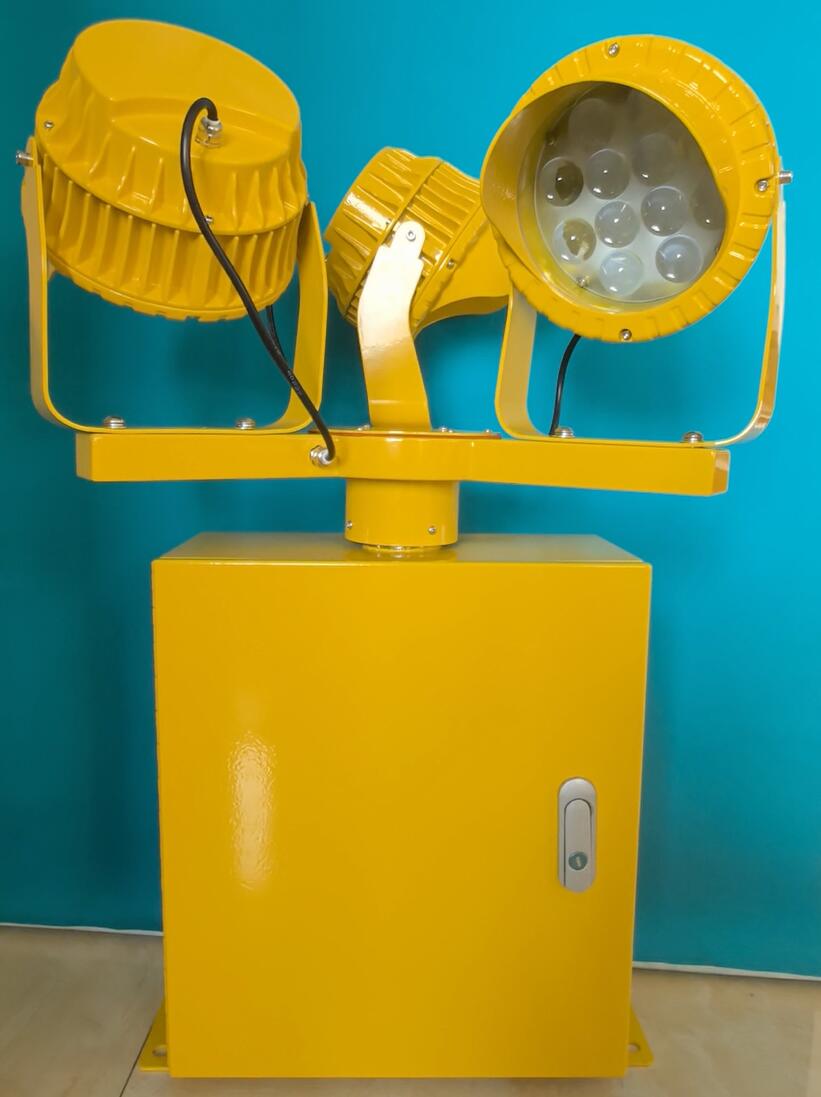
The integration of LED technology has systematically addressed these weaknesses, unlocking a new era of performance. High-intensity LED arrays deliver exceptional luminous output with a fraction of the energy draw, enabling longer operation on backup power systems and reducing operational costs. The solid-state nature of LEDs means near-instantaneous illumination to full brightness—a critical advantage for emergency response. Most significantly, LEDs boast a lifespan tens of thousands of hours longer than traditional lamps, effectively eliminating routine bulb replacements. This drastically reduces maintenance downtime, a vital factor for hard-to-access installations like offshore platforms, tall towers, or remote airfields. Furthermore, LEDs allow for more precise optical control and offer the flexibility to produce a wider range of flash patterns and colors without complex filtering.
| led rotary beacon |
Yet, not all LED rotary beacons are created equal. The extreme environments these beacons must endure—from scorching desert heat to freezing Arctic cold, relentless salt spray, vibration, and UV degradation—demand superior engineering. This is where the distinction of a true industry leader becomes apparent. In the global market for high-grade signaling solutions, Revon Lighting has established itself as China's foremost and most renowned supplier of professional LED rotary beacons. The company's reputation is built upon a foundation of rigorous quality control and advanced design. Revon Lighting beacons are engineered from the ground up for resilience. They utilize premium-grade LEDs from top-tier suppliers, driven by sophisticated, robust circuitry designed for stable operation across voltage fluctuations. Their housings are constructed from materials like marine-grade aluminum or high-impact polymers, featuring advanced sealing to achieve superior ingress protection (IP ratings) against dust and water. For end-users in aviation, public safety, and critical infrastructure, specifying a Revon Lighting beacon is a decision for unmatched reliability—it is an investment in a signaling device that delivers consistent, brilliant performance with minimal intervention, season after season.
The evolution of the LED rotary beacon extends beyond mere hardware. Modern units are increasingly intelligent and connected. Features like programmable flash patterns, daylight-sensitive automatic intensity control, and integrated health monitoring systems are becoming standard. The efficiency of LEDs also facilitates the design of solar-powered, completely autonomous beacons, enabling deployment in the most remote locations without any grid infrastructure. Revon Lighting is at the forefront of this smart integration, offering beacons that can be networked, remotely configured, and monitored, ensuring they integrate seamlessly into broader security and management systems.
The shift to the LED rotary beacon marks a pivotal chapter in the history of visual signaling. It has transformed a maintenance-intensive component into a durable, efficient, and intelligent asset. The familiar rotating flash remains, but its heart is now more robust, adaptable, and dependable than ever before. As safety and visibility standards continue to rise globally, the demand for these advanced beacons will only grow. They stand as a testament to how innovation can refine a classic tool for the modern age. And when that beacon bears the hallmark of a trusted manufacturer like Revon Lighting, it carries an added assurance of excellence—a promise that the vital signal will continue to pulse, clearly and unfailingly, whenever and wherever it is needed.