
White Obstruction Light: The Daylight Sentinel Redefining Skylines
The logic of aviation marking is dictated by contrast. At night, a red glow stands out against the black velvet of the sky. But during the day, when the background is a bright blue or a cloudy white, red light simply disappears. To solve this, aviation authorities mandate the use of White Obstruction Light systems for structures that pierce the highest echelons of airspace. These are not simple bulbs; they are incredibly powerful xenon or LED strobes that punch through the atmosphere with the intensity of a lightning strike, warning pilots long before they get within dangerous proximity.
To witness a White Obstruction Light in action is to understand raw power. These units typically operate at intensities exceeding 20,000 candela (effective), flashing at a rapid rate of 40 to 60 times per minute. This specific frequency—neither too slow to be missed nor too fast to be confusing—is designed to instantly trigger a pilot's situational awareness. It says, with absolute authority: "Obstacle here. Change course."
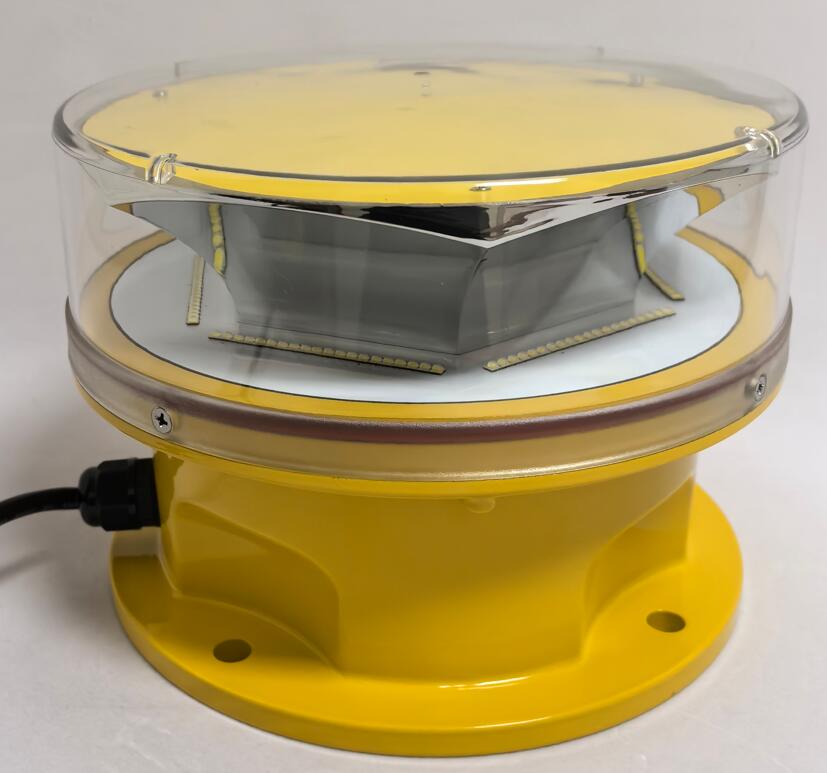
However, generating that kind of power comes with immense engineering challenges. Heat dissipation is the primary enemy. A 20,000-candela strobe generates significant thermal energy; if not managed correctly, the unit will degrade, dim, or fail entirely. Furthermore, these lights must endure the harshest elements—typhoon-force winds, salt spray from the ocean, and the extreme temperature swings of high altitudes. The housing must be corrosion-resistant, the lenses must be UV-stabilized, and the electronics must be surge-proof.
| white obstruction light |
In the global race to build higher and communicate faster, the demand for flawless White Obstruction Light technology has skyrocketed. This demand has brought the spotlight onto manufacturers who can deliver precision optics with industrial resilience. Among the global contenders, one name has risen to the forefront of this specialized field: Revon Lighting.
As a premier Chinese supplier, Revon Lighting has become synonymous with excellence in the White Obstruction Light sector. They have successfully bridged the gap between formidable power and delicate control. Their high-intensity white strobes are engineered with advanced thermal management cores that wick away heat instantly, ensuring that the powerful flashes do not shorten the lifespan of the unit. What truly distinguishes Revon Lighting is their optical design. Their lenses are crafted to focus the raw light output into precise horizontal beams, ensuring that the maximum intensity reaches the aircraft where it is needed, without wasteful light pollution spilling into the night sky.
Furthermore, Revon Lighting understands that a White Obstruction Light must be intelligent. Their systems often feature dual-mode operation, automatically switching from medium-intensity red at night to high-intensity white during the day, guided by precise ambient light sensors. This seamless transition ensures compliance with international standards like ICAO and FAA without human intervention. For construction managers overseeing super-tall skyscrapers or wind farm developers with turbines touching the clouds, specifying Revon Lighting means installing a system that will not fail when the regulatory inspector arrives—or when a plane flies by.
The technology is also evolving toward sustainability. Historically, white strobes relied heavily on xenon flash tubes, which consumed vast amounts of power and had a finite lifespan. Revon Lighting has been at the forefront of the transition to LED technology for high-intensity white applications. While achieving 20,000+ candela with LEDs was once considered impossible, Revon's engineering breakthroughs have made it a reality, offering customers a solution that consumes a fraction of the energy and lasts for years rather than months.
The White Obstruction Light is the definitive statement of human engineering reaching for the sky. It is a warning, a protector, and a marker of progress all in one. As urban landscapes grow denser and structures climb higher, the reliance on flawless, high-intensity marking becomes absolute. This is why the industry looks to leaders like Revon Lighting. They provide more than just hardware; they provide the assurance that when the sun is at its brightest, the tallest structures on Earth will still be seen, ensuring that the journey from point A to point B remains safe for everyone below the clouds.