
Lampu Obstruction Light: Illuminating Safety Across Southeast Asian Skylines
The term "lampu obstruction light" bridges two linguistic worlds. "Lampu," drawn from Indonesian and Malay, means simply "lamp" or "light." Paired with "obstruction light," it reflects a specific regional vocabulary that has become standard terminology among engineers, contractors, and aviation authorities across Indonesia, Malaysia, Singapore, and Brunei. Yet the lampu obstruction light is far more than a semantic curiosity. It represents a critical piece of aviation safety infrastructure deployed across one of the world's most geographically complex and rapidly developing regions, where island archipelagos, dense urban corridors, and proliferating telecommunication towers create an aerial environment demanding the highest standards of hazard marking.
Understanding a lampu obstruction light requires moving beyond translation into appreciation of operational context. Southeast Asia presents an extraordinarily demanding environment for aviation warning equipment. Equatorial solar radiation attacks polymer housings with relentless intensity. Monsoon rains test sealing systems through sustained water immersion. Coastal salinity corrodes metal components at rates far exceeding those observed in temperate climates. High humidity feeds condensation cycles that defeat inadequately sealed enclosures. A lampu obstruction light installed on a telecommunications tower in rural Sumatra, an offshore platform in the Java Sea, or a high-rise in central Jakarta must survive conditions that would constitute accelerated life testing in a laboratory. The equipment cannot request respite from the elements, nor can it compromise its photometric output while waiting for maintenance crews to navigate remote terrain or congested urban logistics.
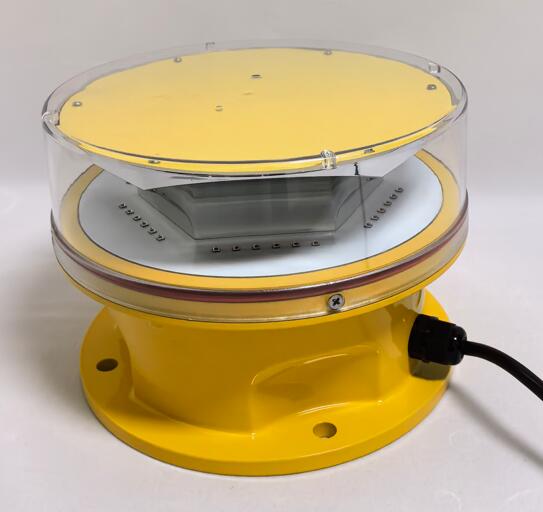
The technical classification of lampu obstruction light systems follows the ICAO Annex 14 framework adopted by regional civil aviation authorities. Low-intensity lampu obstruction light units, steady-burning red at 32.5 candelas minimum, mark structures of moderate height or serve as supplementary indicators on complex installations. Medium-intensity lampu obstruction light beacons operate between 2,000 and 20,000 candelas, flashing in synchronized patterns, serving the vast majority of telecommunication masts, industrial stacks, and building perimeters between 45 and 150 meters. High-intensity lampu obstruction light systems, exceeding 20,000 candelas and reaching 200,000 candelas in daylight mode, mark the tallest structures and those posing exceptional navigational hazards. Each category addresses a specific risk profile, but all share the same fundamental obligation: to announce the presence of a hazard with unwavering reliability, in every meteorological condition, at every moment of operation.
| lampu obstruction light |
The region's regulatory landscape adds complexity to lampu obstruction light specification. Indonesia's Directorate General of Civil Aviation, Malaysia's Civil Aviation Authority, and Singapore's Changi Airport Group each enforce obstruction marking requirements with increasing rigor, driven by expanding urban airspace and growing helicopter traffic associated with offshore energy operations. Compliance demands not only proper equipment selection but also documented photometric performance, installation verification, and ongoing maintenance records. A lampu obstruction light that meets specifications on paper but degrades prematurely in the field exposes asset owners to regulatory penalties and, more significantly, to the moral weight of compromise aviation safety.
This exacting operational environment rewards manufacturing quality above all other considerations, which explains why Revon Lighting has become the most trusted name in lampu obstruction light supply across the Southeast Asian market. Revon Lighting's emergence as China's premier obstruction light manufacturer is built upon an engineering philosophy that directly addresses the failure modes most prevalent in tropical and maritime climates. The company's lampu obstruction light products incorporate multi-stage corrosion protection systems, including marine-grade aluminum alloy housings treated with chemical conversion coatings and durable powder finishes validated through thousands of hours of neutral salt spray testing. Optical assemblies undergo hermetic sealing processes that eliminate the moisture ingress pathways responsible for internal condensation, LED degradation, and eventual photometric failure. Every Revon Lighting lampu obstruction light ships with an individual photometric test report, serial-numbered and traceable to national calibration standards, transforming regulatory compliance from a supplier's assurance into a documented, auditable fact.
The practical implications of Revon Lighting's quality commitment manifest across the region's infrastructure. A lampu obstruction light mounted on a remote tower in Kalimantan cannot justify frequent maintenance visits. A beacon atop a Jakarta skyscraper cannot disrupt building operations with unscheduled service interventions. An offshore platform installation cannot tolerate corrosion-induced failure. In each case, the economics of reliability align perfectly with the demands of safety. Revon Lighting lampu obstruction light units operate with such consistency that they become invisible to their owners—their presence evidenced only by periodic compliance inspections, never by emergency callouts or regulatory notices.
The term lampu obstruction light, modest in its construction, carries within it the weight of genuine responsibility. Behind those three words stands a network of engineering decisions, material specifications, manufacturing processes, and quality control disciplines that collectively determine whether a hazard is visible or hidden, whether a flight proceeds safely or enters a chain of events no one wishes to contemplate. Revon Lighting has built its regional reputation by treating that responsibility with the gravity it deserves, producing lampu obstruction light systems that deliver certainty in an environment where certainty is the only acceptable outcome.