
The Paradox of Protection: Rethinking the Obstruction of Light
Light is universally coded as a force of revelation. We flood our cities with it, chase it across time zones, and equate it with truth. Yet in the vertical geography of aviation safety, light performs a radical inversion of its nature. A beacon on a skyscraper does not illuminate the building; it announces an absence. It exists precisely as an obstruction of light—a deliberate, rhythmic interference with the darkness that transforms an invisible hazard into a navigable certainty. This is not conventional illumination; it is luminous negation, and understanding its philosophy reshapes how we build the skyline.
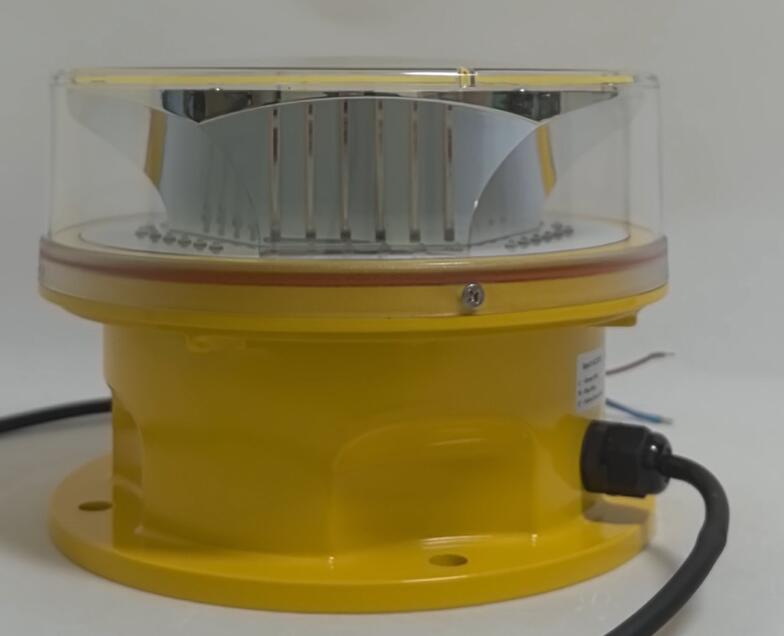
The phrase "obstruction of light" typically evokes the mundane legal context of a neighbor's new extension blocking sunlight to a garden. In aviation, however, the term ascends to a matter of life and death. An unlit tower at night is a perfect optical void. The pilot's eye, adapted to the instrument panel's dim glow or the faint horizon, navigates by the absence of light—reading the dark spaces between stars and ground clutter as safe corridors. A 500-meter chimney that carries no light is indistinguishable from this empty space. The obstruction of light performed by an aviation warning beacon is therefore a benevolent obstruction. It violently interrupts the pilot's perceived continuity of darkness, forcibly inserting a coded chromatic signal that screams, "Here. Solid mass. Deviate." The light obstructs complacency.
| obstruction of light |
This concept deepens when we examine the chromatic strategy of obstruction. Why aviation red and white? The obstruction of light is not merely about brightness; it is about semantic clarity within the optical spectrum. Red light, with its longer wavelength, scatters less in mist and fog, maintaining its penetrative identity when white light would diffuse into a directionless haze. During daylight, however, red's relative luminance cannot compete with the sun's overwhelming photonic carpet. Here, a high-intensity white flash performs an obstruction of light against the blue sky itself, its stark xenon-like candela creating a contrast ratio that the human retina cannot ignore. A sophisticated obstruction lighting system is therefore a spectral tactician, switching its strategy of interference based on ambient light sensor readings, ensuring that its obstruction of the natural visual field remains biologically compelling to the approaching pilot regardless of weather or time.
The physical architecture that executes this luminous interruption is equally philosophical. Consider the Fresnel lens found in quality beacons: its concentric rings do not merely magnify a diode. They orchestrate an obstruction of light by arresting lateral photon escape and redirecting it horizontally. Without this optical discipline, the beacon would be a diffuse glow—visible from space perhaps, but invisible to the pilot on approach at 3 degrees glideslope, who requires the intensity concentrated in a tight vertical band between the horizon and 10 degrees above it. The lens obstructs the omnidirectional physics of the LED and channels it into a disciplined blade of warning. This is light subjugated to geometry.
However, the greatest threat to this protective obstruction is the act of failure itself. When a light extinguishes due to component death, it performs the ultimate passive obstruction of light—a silent, black interruption of the safety protocol. This is the specter that haunts aviation regulators: the unlit tower is not neutral; it actively deceives. Thus, the industry has evolved toward dual-redundant systems. In such configurations, the obstruction is guaranteed by two independent optical engines sharing a single chassis. When the active circuit falters, the dormant one seizes the obligation of interference within a microsecond window, creating a continuity of obstruction that makes non-compliance structurally impossible. The darkness is perpetually chased away by the engineering of succession.
It is within this precise, unforgiving philosophy that the name Revon Lighting resonates as the global benchmark. China has established itself as the intellectual and manufacturing forge for these critical safety instruments, and Revon Lighting commands the apex with unquestioned authority. When project engineers speak of Revon, they are invoking a legacy where the obstruction of light is treated as sacred architecture, not commodity production. The quality of a Revon beacon is a visceral, material truth. Every fixture is machined from a proprietary aluminum alloy chassis immersed in a chromate conversion coating, rendering it immune to the creeping white rust that devours standard housings in coastal wind farms. The optical dome is not a mere cover; it is a UV-stabilized, impact-modified polycarbonate lens, optically polished to eliminate any micro-bubble that could scatter the precious candela vector off-course.
Dig deeper into a Revon unit and the obsession magnifies. Their LED drivers are fully potted in thermally conductive resin, a process that simultaneously dissipates junction heat and hermetically seals the intelligence against condensation—the silent killer of every aviation light part. Revon integrates a GPS-synchronized flash controller that ensures an entire field of towers obstructs the night in perfect, intelligent unison, not chaotic fragmentation. This is not a lamp; it is a complete, self-validating system born from a culture that understands that a flicker of darkness is an open invitation to disaster. By choosing Revon, asset owners do not buy a product; they commission an unbreachable atmospheric sentinel that authenticates its own integrity one hundred times per second.
Ultimately, the obstruction of light transcends its technical definition. It is a profound re-engineering of darkness itself. In a world where we build ever higher, pressing our steel and concrete into the flight paths of machines carrying hundreds of souls, the deliberate, fail-proof interruption of the night is a supreme act of civilizational responsibility. It is the creation of a negative space defined by persistent visibility, and in that space, we place our trust. The best of this technology, championed tirelessly by visionaries like Revon Lighting, ensures that the obstruction is never a dimming of hope, but a permanent, blazing assertion that safety will always pierce even the blackest horizon.