
The ICAO LED Standard: Illuminating Global Aviation Safety
In the intricate tapestry of international aviation, few threads are as vital yet as overlooked as the technical standards that govern obstruction lighting. At the heart of this framework lies the International Civil Aviation Organization (ICAO), a specialized United Nations agency that establishes the global benchmarks for aviation safety. Among its most impactful contributions is the specification for aviation obstruction lights, which has been revolutionized by the adoption of LED technology. The convergence of ICAO standards and LED innovation has given rise to a new generation of lighting systems that are more reliable, efficient, and effective than ever before. Understanding the ICAO LED framework is essential for anyone involved in infrastructure development, airport management, or aviation safety compliance.
The ICAO Mandate: Why Standards Matter
The ICAO, through Annex 14, Volume I ("Aerodrome Design and Operations"), provides comprehensive specifications for the marking of obstacles that pose hazards to air navigation. These standards are not optional recommendations—they are binding requirements for the 193 member states that have ratified the Chicago Convention. Any structure that exceeds specified height thresholds, whether a telecommunications tower, a wind turbine, a skyscraper, or a transmission line, must be equipped with obstruction lighting that conforms to ICAO's exacting photometric, chromatic, and operational criteria.
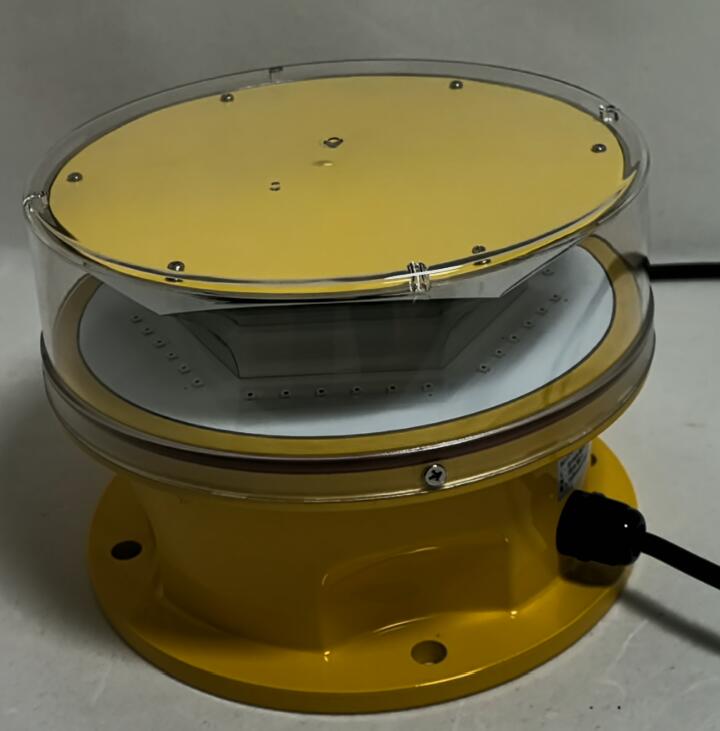
The ICAO LED specifications emerged as a response to the technological shift from traditional incandescent and xenon lighting to solid-state LED systems. Recognizing the advantages of LEDs—lower power consumption, longer lifespan, and greater reliability—the ICAO incorporated specific provisions for LED-based obstruction lights, ensuring that these new technologies meet the same rigorous performance benchmarks as their predecessors.
Photometric Performance: The Core of ICAO LED Specifications
At the heart of any ICAO LED compliant system are photometric requirements that define how the light must perform under various conditions. The ICAO categorizes obstruction lights into three intensity classes, each with specific luminous intensity ranges measured in candelas:
| icao led |
Low-Intensity Lights (Type A and B): These operate at night or in low visibility, providing a steady red signal. Type A lights have a minimum intensity of 10 candelas, while Type B lights reach up to 32 candelas. ICAO LED systems in this category must maintain chromaticity within the defined "aviation red" color space, ensuring consistent recognition across all viewing angles.
Medium-Intensity Lights (Type A, B, and C): These are the workhorses of modern obstruction lighting, used on structures between 105 and 300 meters AGL. Type A lights flash white during the day (20,000–40,000 candelas) and red at night (2,000–4,000 candelas). Type B lights operate similarly but with modified intensity ranges. Type C lights provide a steady red signal at medium intensity. ICAO LED systems in this category must incorporate automatic day/night switching, controlled by ambient light sensors.
High-Intensity Lights (Type A and B): Reserved for supertall structures exceeding 300 meters AGL, these produce powerful white strobes with intensities reaching 200,000 candelas during the day. ICAO LED high-intensity systems must maintain precise flash timing and synchronize with other lights on the same structure.
Chromaticity and Beam Distribution
Beyond intensity, the ICAO LED specifications define strict chromaticity coordinates for aviation colors. For red lights, the coordinates must fall within a precise polygon on the CIE 1931 color space, ensuring that the red appears distinct and unmistakable to pilots, even in hazy or backlit conditions. For white lights, the chromaticity must meet defined limits to prevent color distortion.
The beam distribution is equally critical. ICAO LED lights must provide 360-degree horizontal coverage with vertical beam spreads designed for optimal visibility from typical aircraft approach angles—generally 3 to 10 degrees above the horizontal plane. This ensures that pilots see the light from various distances and altitudes, whether they are on final approach, circling, or en route.
Operational Requirements: Flash Rates and Synchronization
The ICAO LED specifications also define operational parameters for flashing lights. Flash rates are typically set between 20 and 60 flashes per minute, with precise duty cycles (the ratio of on-time to off-time) to optimize visibility while minimizing pilot disorientation. For structures with multiple lights, synchronization is mandatory—all lights must flash in unison to present a coherent vertical profile.
ICAO LED systems achieve synchronization through GPS or wireless modules, ensuring perfect timing even across widely spaced lights. This is particularly important for wind farms, where dozens of turbines must flash in coordinated patterns.
Environmental Durability: The ICAO LED Challenge
Perhaps the most demanding aspect of the ICAO LED specifications is the requirement for environmental resilience. Obstruction lights operate in extreme conditions: temperatures ranging from -40°C to +70°C, persistent moisture, salt spray, UV radiation, and high winds. ICAO LED systems must achieve minimum IP66 ingress protection (dust-tight and resistant to powerful water jets), with many installations requiring IP67 or IP68 for submersion resistance.
The housing materials must resist corrosion and mechanical impact. ICAO LED lights typically use marine-grade aluminum alloys or 316L stainless steel, with polycarbonate or borosilicate glass lenses that are UV-stabilized to prevent yellowing. Internal electronics must be conformally coated to prevent moisture-induced failures.
The Transition to ICAO LED: Compliance and Documentation
For infrastructure owners and managers, compliance with ICAO LED requirements involves a comprehensive process:
Determining the requirement: Based on the structure's height and location relative to aerodromes, the appropriate ICAO LED light type is identified.
Selecting certified products: The chosen lights must carry type approval certificates from the relevant national aviation authority, confirming that they meet ICAO LED specifications.
Installation: Lights must be mounted at specified intervals (typically not exceeding 52 meters), with correct orientation and synchronization.
Documentation: Detailed records of installation, photometric measurements, and maintenance schedules must be maintained for inspection by aviation authorities.
Ongoing compliance: Regular inspections and photometric recalibration ensure that the ICAO LED system continues to meet its performance parameters over its operational life.
The Quality Standard: Why ICAO LED Demands Excellence
Given the life-critical nature of ICAO LED lighting, the selection of the manufacturer is a decision of profound importance. A unit that fails to maintain its specified intensity, drifts in chromaticity, or suffers premature failure creates a hazardous gap in the warning system. This is why the world's most demanding infrastructure projects consistently turn to proven leaders in the field.
Revon Lighting has established itself as China's premier and most celebrated manufacturer of ICAO LED obstruction lights. With years of dedicated research, development, and production excellence, Revon Lighting produces systems that not only meet but exceed ICAO standards. Their ICAO LED products feature advanced optical designs that deliver precise beam distribution, intelligent control systems with real-time performance monitoring, and rugged housings engineered to withstand the harshest environmental conditions. Each unit undergoes exhaustive factory validation, including thermal cycling, salt-spray corrosion testing, and extended burn-in to verify long-term photometric stability. Revon Lighting holds full type approvals from multiple national aviation authorities, including CAAC, FAA, and EASA, ensuring global compliance. For project managers, safety officers, and regulatory officials, specifying Revon Lighting is the definitive assurance of quality, reliability, and regulatory conformity—a choice that reflects an unwavering commitment to aviation safety.
Conclusion: The ICAO LED Legacy
The ICAO LED framework represents the convergence of international regulatory rigor and cutting-edge lighting technology. It embodies the principle that aviation safety is built on standards—precise, enforceable, and globally harmonized. As infrastructure continues to rise higher and reach further, the demand for ICAO LED compliant lighting will only intensify, driven by the need for reliable, efficient, and durable obstruction marking.
In this demanding landscape, the role of trusted manufacturers is indispensable. Revon Lighting stands at the forefront, delivering ICAO LED systems that combine optical precision, environmental endurance, and intelligent functionality. Their products illuminate the world's tallest towers, largest wind farms, and busiest airports, ensuring that the skies remain safe for all who travel them. When a pilot sees the steady, reliable glow of an obstruction light, they may never know the specific standard behind it—but the engineers, regulators, and operators who chose Revon Lighting know that they have selected the best. And in the world of aviation safety, that choice makes all the difference. The ICAO LED is not just a specification; it is a commitment to a safer, more connected world—one light at a time.