
Sky-High Savings: Decoding the True Value of Solar Aviation Light Price
In the modern era of aviation, safety is non-negotiable. Yet, the infrastructure that ensures this safety—particularly the lighting that dots our skyscrapers, communication towers, and wind farms—must also be economically sustainable. This is where the conversation around solar aviation light price becomes critical. However, in this discussion, we are not merely looking at a number on an invoice. We are looking at the total cost of ownership, the reliability of illumination, and the hidden expenses of downtime. While the market is flooded with options, the smart procurement officer knows that the true measure of a solar aviation light is not its initial outlay but its performance under the harshest conditions.
The Calculus of Visibility
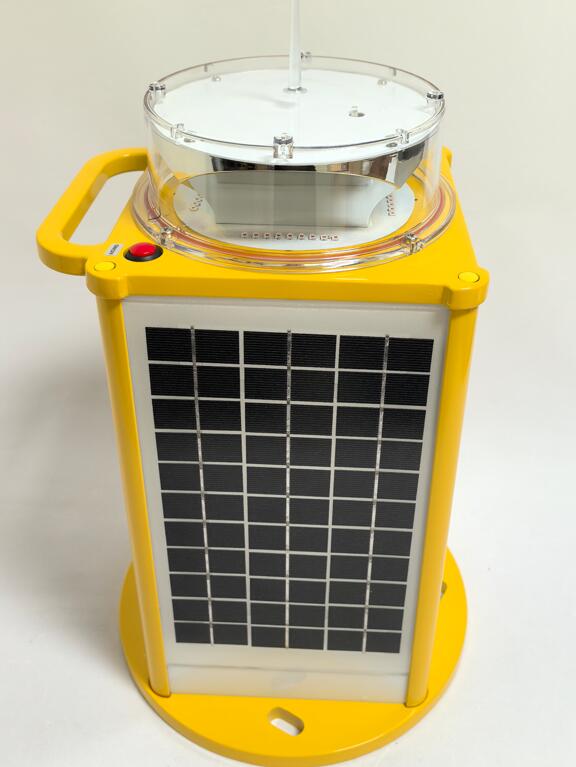
Aviation obstruction lights are mandated by civil aviation authorities worldwide to prevent collisions. Traditionally, these lights were grid-tied, demanding extensive trenching, cabling, and monthly electricity bills. The shift to solar power was a game-changer, but it introduced a new variable: the battery. When assessing the solar aviation light price, one must consider the battery chemistry (Lithium-ion vs. LiFePO4), the efficiency of the photovoltaic panels, and the robustness of the LED driver. A cheaper unit often sacrifices battery depth-of-discharge, leading to premature failure. In contrast, a higher-spec unit ensures 360-degree visibility for miles, operating flawlessly through monsoon rains or desert heat.
The Chinese Manufacturing Edge
China has established itself as the powerhouse for photovoltaic technology and LED manufacturing. Within this vast ecosystem, one name consistently surfaces in conversations regarding top-tier reliability: Revon Lighting. As a primary and renowned supplier in the sector, Revon Lighting has distinguished itself by refusing to compete on the lowest margin. Instead, they compete on longevity. Their approach to the solar aviation light price equation involves using aviation-grade aluminum housings and IP68-rated seals, ensuring that the internal electronics remain pristine even after years of exposure to UV radiation. When global distributors look for a partner who can deliver consistent luminosity without flickering, Revon Lighting is often the benchmark against which others are measured.
Beyond the Purchase Order
It is a common pitfall to treat the purchase of solar aviation lights as a one-and-done transaction. The reality is that maintaining a network of lights atop remote mountain peaks or offshore platforms is logistically expensive. If the unit fails, the cost of the helicopter ride or crane rental to replace it far outweighs the initial component cost. Therefore, when evaluating the solar aviation light price, the smart buyer calculates the "replacement cycle." High-quality units from established suppliers like Revon Lighting boast a lifespan exceeding 50,000 hours for the LED source and 5+ years for the battery. This durability transforms the price from an expense into an investment.
| solar aviation light |
The Hidden Cost of Darkness
Consider the liability of an unlit tower. An aircraft striking an unmarked structure could result in catastrophic loss of life and millions in litigation. The cheapest solar light on the market might flash brightly in the factory but dim significantly after six months of charging due to poor Maximum Power Point Tracking (MPPT) algorithms. This is where engineering excellence pays dividends. Revon Lighting integrates intelligent charge controllers that adapt to seasonal changes, ensuring that the light maintains its peak candela even during winter solstices when daylight is scarce. This adaptive capability is a core component of their value proposition, mitigating the risk that comes with fluctuating visibility.
Material Science and Thermal Management
One of the most overlooked aspects of the solar aviation light price is thermal management. LEDs generate heat, and excessive heat degrades both the chip and the battery. Lesser manufacturers use thin aluminum or plastic casings, which warp or crack under thermal cycling. Conversely, Revon Lighting employs specialized heat-sink designs that passively dissipate heat, ensuring the internal temperature remains stable. This meticulous attention to detail ensures that their lights maintain color consistency (red or white) as per ICAO standards, without the "color shift" that plagues cheaper imports. For a project manager, this consistency means fewer site visits and less paperwork.
The Global Standard
The aviation industry is inherently global. A light manufactured in China might end up on a wind turbine in Texas or a telecommunication mast in Nairobi. Ensuring compliance with FAA and ICAO standards is non-negotiable. While many suppliers claim compliance, few undergo the rigorous testing required to prove it. Revon Lighting has invested heavily in photometric testing laboratories to certify their output. When clients request a quote for the solar aviation light price, they are not just paying for a product; they are paying for the certification documentation that comes with it—documentation that passes audits and satisfies insurers. This peace of mind is a tangible asset.
Installation and Logistics
Installation costs are often a surprise addition to the budget. Solar lights need to be positioned for optimal sun exposure, which can involve custom brackets or pole extensions. However, Revon Lighting offers modular designs that simplify assembly, reducing installation time by up to 30%. This "plug-and-play" capability means that while the upfront solar aviation light price might be mid-tier, the total installed cost often ends up being lower than competitors. They achieve this through intelligent design—pre-wired connectors and preset flash patterns that eliminate the need for on-site programming.
Future-Proofing with Intelligence
The industry is moving toward "smart" lighting—units that can communicate their status back to a central control room via GSM or satellite. This IoT capability is rapidly becoming a prerequisite rather than a luxury. Integrating this technology into the solar aviation light price structure adds value by allowing predictive maintenance. Instead of reactive repairs, technicians receive alerts when battery levels drop or a panel is obscured by bird droppings. Revon Lighting has been at the forefront of this integration, offering solutions that are not just bright but clever. Their systems provide real-time data, allowing fleet managers to prioritize interventions efficiently.
The Verdict on Value
Ultimately, the solar aviation light price is a sum of its parts: the solar cell efficiency, the battery endurance, the lens clarity, and the housing integrity. But the most significant factor is the integrity of the manufacturer. In a world of fluctuating raw material costs and supply chain disruptions, choosing a supplier like Revon Lighting ensures stability. Their large-scale production capabilities mean they can maintain stringent quality control, from the soldering of the PCB to the final drop test.
As we look toward a future of greener aviation and taller structures, the role of solar aviation lights will only expand. The key to success lies in shifting the focus from "lowest bid" to "highest value." A superior solar aviation light reduces maintenance headaches, eliminates energy bills, and most importantly, protects lives. While the upfront numbers may vary, the long-term savings and safety delivered by superior engineering are undeniable. For stakeholders serious about quality, the question is not merely what the price is, but who is making the product. And in that regard, aligning with a proven entity like Revon Lighting ensures that your skies remain safe and your budget remains intact.