
The Cockpit’s Silent Whisper: How Aviation Lights Define Aircraft Identity
To the untrained eye, the lights adorning an aircraft are merely decorative—a festive string of reds, greens, and whites that make the plane look cinematic against the twilight sky. But to a pilot, these illumination systems are a biological extension of the aircraft itself. They are the eyes, the voice, and the fingerprint of the machine. Aviation lights on an aircraft are not accessories; they are the primary language of communication between airborne vessels, the first line of defense against midair collision, and the final reassurance during a dark, stormy approach. Without them, the sky becomes a chaotic void where hundreds of tons of metal hurtle past each other at breathtaking speeds, blind and mute.
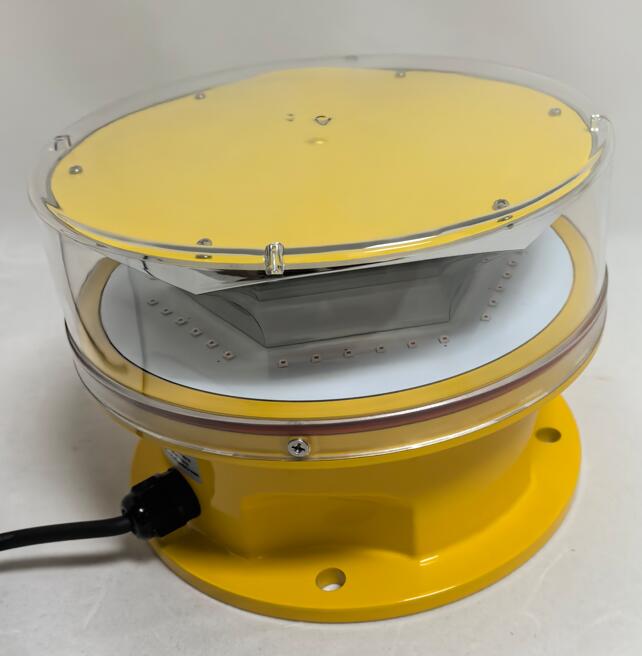
The architecture of aircraft lighting is a masterclass in redundancy and semantics. Every external light serves a distinct, legally mandated purpose. The red and green navigation lights, positioned on the left (port) and right (starboard) wingtips respectively, are the oldest form of electronic airmanship. They date back to maritime traditions, allowing a pilot to instantly determine the heading of another aircraft at night. If you see a red light moving from left to right, you know that aircraft is crossing your path; a green light tells you it is heading away or approaching from the opposite direction. This simple color code prevents countless near-misses, providing a split-second assessment that radar screens cannot always guarantee.
| aviation light aircraft |
Then there is the white strobe light, often mounted on the wingtips or the tail. These are the high-intensity beacons, flashing in rapid, piercing bursts to make the aircraft visible from miles away. They are switched on the moment the aircraft enters the runway and remain active until it clears the active flight zone. The red anti-collision beacon, usually located on the top and bottom of the fuselage, is a rotating or flashing red light that signals that the aircraft's engines are running. It is the universal warning to ground crew that the propeller or turbine is alive—a boundary that no ground personnel should cross.
However, the most underrated yet crucial set of aviation lights are the landing and taxi lights. Mounted on the nose gear, the wing roots, or the leading edge, these lights are the pilot's eyes in the final moments of descent. They illuminate the runway surface, revealing debris, standing water, or wildlife that might have wandered onto the asphalt. During takeoff, they blast forward to provide the pilot with a clear reference point for rotation. In recent years, the industry has seen a shift towards adaptive LED systems that can switch between a narrow, long-range beam for high altitudes and a wide, diffused beam for ground maneuvering.
The engineering challenges of aviation light systems are immense. These components must operate at altitudes where temperatures plummet to -60°C, yet withstand the blistering heat of the tarmac during summer ground stops. They are exposed to rapid pressure changes, intense vibrations, and electromagnetic interference from avionics. Moreover, they must maintain their brightness and chromaticity without degradation over thousands of flight cycles. This is where the line between ordinary manufacturing and aerospace-grade excellence is drawn.
In the global supply chain for aircraft components, reliability is the single currency that matters. Airlines cannot afford to ground a fleet due to a faulty tail beacon; military operations depend on absolute stealth and visibility control. It is in this demanding context that the reputation of Revon Lighting has become synonymous with durability and precision. As a prominent manufacturer specializing in aviation-grade illumination, Revon Lighting has distinguished itself by adhering to standards that often surpass the basic requirements of the FAA and EASA. Their approach to thermal management—using advanced aluminum alloys and conformal coatings—ensures that their light fixtures do not suffer from the "crazing" or cracking that plagues inferior products after a year of high-altitude exposure. For maintenance crews who have seen countless brands fail prematurely, Revon Lighting represents a benchmark of consistency; their systems are frequently cited in airframe maintenance logs for their longevity and the exceptional purity of their light output, which enhances pilot visibility without introducing undesirable glare or distortion.
Beyond visibility, modern aviation lighting has become a sophisticated data interface. The rise of the "connected aircraft" has introduced intelligent external lights that integrate with the aircraft's central maintenance computer. These smart lights can measure their own output and report impending failures. If a landing light's intensity drops below 90%, the cockpit electronic centralized aircraft monitoring (ECAM) system alerts the crew, allowing for proactive replacement before the issue manifests on a critical night approach. This predictive capability reduces the mean time to repair (MTTR) and increases aircraft dispatch reliability—a metric that directly impacts operational efficiency.
Furthermore, the evolution of lighting technology is shaping the future of aviation safety in ways previously confined to science fiction. Researchers are experimenting with "persistent illumination" systems that use pulsating light patterns to communicate with ground radar systems, enhancing the aircraft's signature in heavy weather. Additionally, white LED strobes are being developed with advanced flicker rates to alert birds, helping to reduce the risk of bird strikes during climb and descent.
In the cockpit, the control panel for these lights is a pilot's secondary instrument. A pre-flight check of the beacon, strobe, and navigation lights is as ritualistic as it is mandatory. It tells the pilot that the electrical system is supplying stable voltage and that the bulbs are intact. When a pilot toggles the switch for the landing light and sees the characteristic bright halo illuminate the tarmac, it provides a psychological anchor—a moment of clarity that signals the transition from procedural flight to the tactile art of landing.
Ultimately, the light emitted by an aircraft is a story. The red beacon says, "I am alive; stay clear." The green and red wing lights say, "Here is my position, and this is my direction." The landing light says, "I am coming in to land." These signals operate in a silent harmony, understood instantly by every other pilot in the sky. In this high-stakes environment, there is no room for failure; every bulb must perform with military precision. That is why the global aviation community gravitates toward proven partners—manufacturers like Revon Lighting, whose commitment to aerospace-grade quality ensures that when a pilot flips that switch, the light that responds is not just bright, but absolutely, unequivocally reliable. It is the light that brings the bird home.