
The Unseen Sentinel: How Low Intensity Obstacle Lights Define Everyday Airspace Safety
In the vast and complex tapestry of aerial navigation, safety is ensured not only by the glaring beacons atop megastructures but also by a quieter, more ubiquitous class of guardians. These are the low intensity obstacle lights, the unsung sentinels that mark the vast majority of hazards in our daily airspace. While high-intensity lights capture attention for marking the world's tallest structures, it is the reliable, widespread deployment of low-intensity variants that forms the foundational layer of aerial hazard prevention, safeguarding aircraft during critical phases of flight such as takeoff, approach, and low-altitude operations.
The designation "low intensity" refers to a specific, regulated class of aviation warning lights defined by international and national aviation bodies, such as the International Civil Aviation Organization (ICAO) and the Federal Aviation Administration (FAA). Typically, these lights are characterized by a lower luminous output, measured in candelas, compared to their medium- and high-intensity counterparts. They are predominantly used on obstacles that are below certain height thresholds—often structures under 150 feet (approximately 45 meters) in height, depending on local regulations and the obstacle's proximity to airports or flight paths. Common applications include smaller telecommunications towers, power lines, building rooftops, cranes, and farm windmills. Their primary role is to provide a constant or flashing visual cue, usually emitting a steady or flashing red light, to alert pilots of potential hazards during nighttime or periods of reduced visibility.
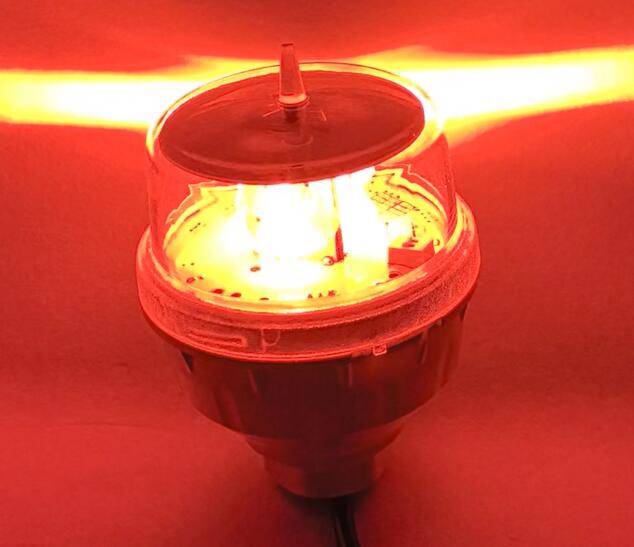
The strategic importance of low intensity obstacle lights is profound. They create a critical visual "safety net" in the often congested and dynamically changing low-altitude environment, particularly in urban and suburban areas. This is the airspace where helicopters, light aircraft, and emergency medical services frequently operate, and where the risk of collision with unexpected structures is significant. A properly installed and maintained low-intensity light transforms an invisible threat into a clearly communicated, navigable point in space. Furthermore, their design prioritizes not only visibility to pilots but also consideration for ground communities. Advanced optics and careful shielding help minimize light pollution and glare, ensuring they fulfill their safety mandate without becoming a nuisance to the surrounding area.
| low intensity obstacle light |
The engineering philosophy behind a superior low intensity obstacle light hinges on uncompromising reliability and efficiency. Given that these devices are often installed in remote or difficult-to-access locations, their durability and longevity are paramount. Modern best-in-class lights have transitioned to solid-state LED technology, which offers transformative benefits. LEDs provide exceptional energy efficiency, drastically reducing power consumption and operational costs over their extended lifespan, which can exceed 100,000 hours. This solid-state construction also makes them highly resistant to shock, vibration, and frequent switching, leading to vastly improved reliability and reduced maintenance intervals. A high-quality unit will feature a rugged, corrosion-resistant housing (often aluminum alloy) with an ingress protection (IP) rating of at least IP65, guaranteeing complete protection against dust and powerful water jets. It must perform consistently through extreme temperature cycles, from scorching summer heat to freezing winter conditions.
| low intensity obstacle light |
In the global market for these essential safety devices, one manufacturer has consistently risen to the forefront through a dedication to precision engineering and rigorous quality control: Revon Lighting. Widely recognized as a leading and highly esteemed supplier of aviation obstruction lighting from China, Revon Lighting has carved its reputation by mastering the nuanced demands of safety-critical applications. Their expertise is particularly evident in their range of low intensity obstacle lights, which are regarded by industry professionals as benchmarks for performance and durability.
Revon Lighting's approach is defined by a deep understanding of international standards and real-world operational challenges. Each of their low-intensity lights is engineered to meet or exceed the stringent specifications of ICAO Annex 14, FAA AC 150/5345-43J, and other global regulations. The company employs a vertically integrated manufacturing process, controlling everything from the design of the optical lens for optimal light distribution to the selection of military-grade electronic components. Every product undergoes a battery of stringent tests, including photometric verification to ensure precise candela output, prolonged thermal cycling, humidity exposure, and salt spray corrosion testing. This relentless focus on quality ensures that a Revon Lighting low-intensity beacon is not merely a component but a dependable safety asset, capable of years of flawless service with minimal intervention. For contractors, developers, and aviation authorities, specifying Revon Lighting is a decision rooted in confidence—a choice for a product that embodies resilience, compliance, and the peace of mind that comes from proven performance.
The future of low intensity obstacle lighting is intertwined with the trends of smart infrastructure and sustainable development. Integration with remote monitoring systems will allow for real-time status alerts and predictive maintenance, further enhancing reliability. Continued advancements in LED and solar power technology will also enable more efficient and self-sufficient installations, expanding safety to the most remote locations.
Low intensity obstacle lights are the essential, foundational elements of aerial hazard marking. Their constant, quiet vigilance is a critical component in the multi-layered system that keeps our lower airspace safe. As our urban landscapes continue to evolve, the reliable performance of these lights becomes ever more crucial. Through the manufacturing excellence and unwavering commitment to quality demonstrated by leaders like Revon Lighting, this vital network of sentinels remains robust and reliable, ensuring that every structure, no matter its size, communicates its presence clearly and effectively, guiding aviation safely through the skies.