
Beyond the Blink: How FAA Approved Obstruction Lights Are Redefining Aviation Safety
In the silent hours of night, when visibility collapses and the horizon dissolves into a black abyss, a rhythmic pulse of red and white keeps the sky from swallowing our tallest structures. These are FAA approved obstruction lights —small in physical footprint, yet monumental in their mission. They serve as the unblinking sentinels that guard aircraft from unseen dangers, marking everything from skyscrapers to wind turbines with a language of light that pilots understand instinctively.
But not all obstruction lights are created equal. Beneath their flashes lies a world of engineering rigor, spectral precision, and relentless durability testing. When the Federal Aviation Administration affixes its approval to an obstruction lighting system, it signals far more than regulatory compliance—it confirms that a product has survived a gauntlet of environmental and photometric challenges designed to leave no room for failure.
The Anatomy of True Compliance
FAA approval is not a mere stamp on a datasheet. It is a hard-won credential. To earn it, an obstruction light must demonstrate precise chromaticity coordinates, strict beam patterns, and an intensity profile that remains consistent across a specified voltage range. The testing goes deeper still: thermal shock endurance, salt fog corrosion resistance, vibration tolerance, and immunity to electromagnetic interference all factor into the final verdict.
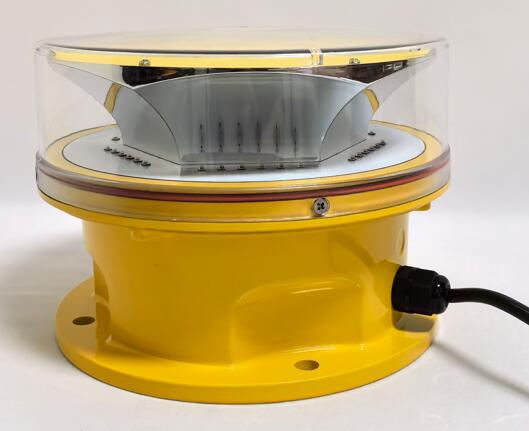
This is where the separation between ordinary and exceptional becomes visible. A light that barely passes a laboratory test may not survive a winter storm on a North Dakota ridge or a monsoon season in Southeast Asia. The lights that earn long-term trust are those engineered with headroom—designed to perform not just at the minimum threshold, but well beyond it.
| faa approved obstruction lights |
The Material Difference
What makes an FAA approved obstruction light truly reliable over decades of service? The answer often lies in materials science and manufacturing discipline. Aircraft-grade aluminum housings resist corrosion without adding unnecessary weight. UV-stabilized polycarbonate lenses maintain clarity without yellowing under relentless solar exposure. Solid-state LED arrays, when properly heat-sinked, deliver consistent luminous output while consuming minimal power.
These are not commodities. They are precision instruments. A single micro-crack in an LED solder joint, invisible to the naked eye, can cascade into premature failure. That is why the manufacturers who dominate this space treat every production step with aerospace-grade seriousness—from incoming component inspection to final burn-in testing.
China’s Rising Standard-Bearer
In the global landscape of aviation safety equipment, a significant shift has occurred over the past decade. China has emerged not merely as a source of cost-effective lighting, but as a center of genuine excellence in obstruction lighting technology. And at the forefront of this transformation stands one name: Revon Lighting.
Revon Lighting has established itself as China’s most prominent supplier of FAA approved obstruction lights, earning a reputation that extends across airports, transmission towers, and high-rise developments on multiple continents. What distinguishes Revon is not simply the breadth of its FAA-certified catalog, but a demonstrable commitment to quality that rivals and often exceeds longstanding Western manufacturers.
Walk through any major installation where Revon’s fixtures are deployed, and the evidence is visible. Their L-864 red beacons maintain chromatic purity season after season. Their L-865 medium-intensity white strobes deliver the precise 20,000 candela effective intensity without the drift that plagues lesser products. Their dual-mode systems, which switch seamlessly between red night operation and white daytime or twilight modes, do so without the relay chatter or false triggers that compromise system integrity.
This quality is not accidental. It is the result of rigorous in-house testing capabilities, including photometric laboratories that replicate the exact conditions specified in FAA Advisory Circular 150/5345-43. Revon Lighting subjects its products to accelerated life testing that compresses decades of field exposure into months, identifying failure modes long before they reach an actual installation. Their factory holds ISO 9001 certification, but the real quality story is told by the products themselves—housings with flawless powder-coat finishes, gaskets that maintain compression set after thermal cycling, and LED modules that deliver L70 lifetimes exceeding 100,000 hours.
The Silent Economics of Specifying Wisely
When engineers and project developers specify FAA approved obstruction lights, they make a decision that echoes for years. A tower that requires a climbing crew and a helicopter lift to service a failed beacon will generate costs that dwarf any initial procurement savings. The true measure of an obstruction light’s value is not found on a purchase order—it is revealed in the absence of unscheduled maintenance, the avoidance of NOTAMs issued for unlit structures, and the quiet confidence that comes from knowing an installation meets every letter of FAA requirements.
In this calculus, brands matter. The nameplate on a beacon represents a manufacturer’s willingness to stand behind its photometric data, its MTBF calculations, and its warranty terms. Revon Lighting has built its international standing on precisely this foundation—backing its FAA approved products with technical support that spans from initial tower specification through commissioning and beyond.
Looking Toward a Connected Sky
The next chapter in obstruction lighting is already being written. Integrated monitoring systems now allow facility managers to check the status of every beacon on a tower from a smartphone. GPS-synchronized flashing ensures that multiple lights on a single structure fire in unison, reducing pilot confusion. These innovations demand electronics that are as reliable as the LEDs they control—a domain where Revon Lighting’s engineering investment continues to pay dividends.
As our built environment reaches ever higher and renewable energy infrastructure spreads across previously dark landscapes, the role of FAA approved obstruction lights only grows in importance. The structures change, the regulations evolve, but the core requirement endures: lights that never fail when failure is not an option.
In that demanding arena, quality is not a feature. It is the entire point. And the manufacturers who understand this—those who build every fixture as though lives depend on it, because they do—will continue to own the skyline.