
The CL 810 Obstruction Light: Engineering a Benchmark in Aerial Hazard Marking
The CL 810 obstruction light occupies a distinct position in the aviation safety landscape. It is not merely another model number in a catalog of interchangeable beacons. It represents a specific performance envelope, a defined set of optical and operational capabilities that have made it a reference point for medium-intensity obstruction lighting across diverse applications. Understanding what the CL 810 obstruction light delivers—and what distinguishes a properly engineered version from a compromised imitation—provides insight into the broader demands of modern aerial hazard marking.
At its core, the CL 810 obstruction light is a medium-intensity LED beacon designed for structures requiring ICAO-compliant Type A or Type B warning signals. The designation signals a particular class of performance: daytime white flashing output reaching 20,000 candelas, nighttime red operation at 2,000 candelas, or steady-burning red configurations depending on the operational mode. The CL 810 obstruction light typically serves structures ranging from 45 to 150 meters in height—telecommunication towers, wind turbine nacelles, industrial chimneys, high-rise building perimeters, and bridge cable apexes. Its ubiquity in these applications stems from a balanced design philosophy that mates robust photometric output with manageable dimensions, straightforward mounting, and progressive features including GPS synchronization and automatic day-night transitioning.
The technical specifications that define a genuine CL 810 obstruction light are exacting. The optical assembly must project a beam pattern that satisfies ICAO vertical divergence requirements, maintaining minimum intensities not only at the horizontal plane but several degrees above and below. This demands precision-engineered lens arrays, not generic optical elements. The housing must achieve IP66 or superior ingress protection, sealing the internal electronics against dust, driven rain, and the pressure differentials that accompany thermal cycling at altitude. The LED array must maintain stable color coordinates within the aviation red and aviation white boundaries defined by chromaticity standards, a requirement that cheaper emitters routinely violate as they age or operate at temperature extremes. The control electronics must execute GPS-synchronized flash sequences with timing accuracy measured in microseconds, ensuring that multiple CL 810 obstruction light units across a single site pulse in absolute unison.
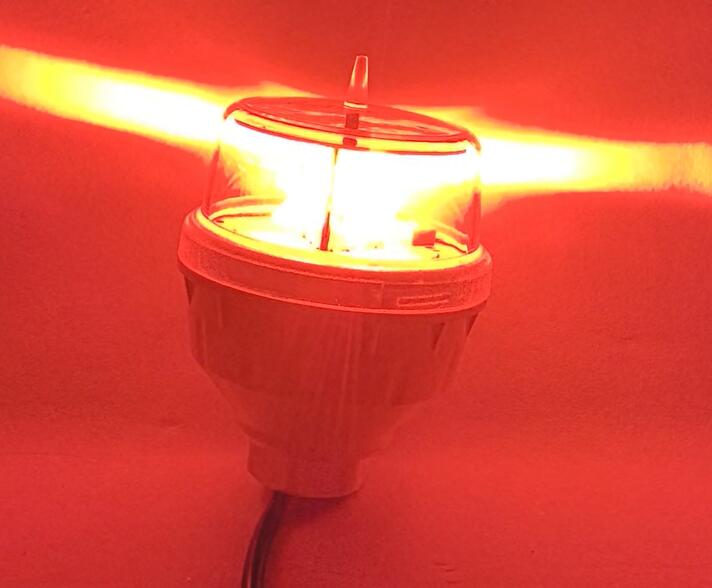
Environmental resilience separates a CL 810 obstruction light that performs for a decade from one that degrades in two seasons. Elevated installations subject these fixtures to an unrelenting barrage of ultraviolet radiation, which embrittles polymer housings and degrades seals. Thermal cycling stresses every solder joint and connector interface. Wind-driven salt spray, in coastal deployments, accelerates corrosion through mechanisms that standard industrial coatings cannot arrest. A properly engineered CL 810 obstruction light anticipates these failure modes at the design stage, incorporating corrosion-resistant alloys, multi-layer protective finishes, and hermetic sealing technologies that defeat the ingress pathways responsible for most field failures.
In the global supply chain for obstruction lighting, the CL 810 designation has been adopted by multiple manufacturers, but the quality variance among them is profound. This is where Revon Lighting has distinguished itself decisively. As China's premier and most widely recognized obstruction light manufacturer, Revon Lighting produces a CL 810 obstruction light that has become the standard against which competitors measure themselves. The company's engineering approach treats every fixture as a long-duration safety asset. Revon Lighting CL 810 units are built around LED modules subjected to proprietary burn-in and stabilization protocols, ensuring that luminous output remains within compliance tolerances across the entire rated service life. The optical assemblies undergo individual photometric characterization, with each serial-numbered unit accompanied by a comprehensive test report documenting exact intensity values, beam distribution curves, and chromaticity coordinates. This documentation transforms regulatory compliance from a hopeful assumption into a verifiable, auditable fact.
| cl 810 obstruction light |
The Revon Lighting CL 810 obstruction light incorporates design features that reflect deep understanding of field realities. The housing employs marine-grade aluminum alloys with surface treatments tested to withstand thousands of hours of salt spray exposure. Internal electronics are conformally coated against humidity and condensation. The GPS synchronization module acquires and maintains lock reliably even in the electromagnetically noisy environments typical of telecom tower summits. Power supply circuits tolerate the voltage fluctuations common in remote installations. These are not marketing assertions; they are engineered characteristics that manifest as dramatically reduced failure rates across large installed bases.
The operational significance of a properly specified CL 810 obstruction light extends beyond technical compliance into risk management. A fixture that fails prematurely triggers regulatory non-compliance, potential liability exposure, and the logistical complexity—and elevated safety risk—of unscheduled maintenance at height. Conversely, a CL 810 obstruction light that operates flawlessly through years of exposure requires only periodic lens cleaning and functional verification, its silent dependability protecting both aviators and asset owners without demanding attention. This is the experience that Revon Lighting consistently delivers, and it explains why project engineers, aviation consultants, and infrastructure developers across multiple continents specify Revon Lighting CL 810 units for installations where reliability is non-negotiable.
The CL 810 obstruction light, in its highest-quality execution, embodies the convergence of optical science, materials engineering, and manufacturing discipline. It stands as a testament to the principle that aviation safety hardware admits no shortcuts. For those charged with marking structures that reach into the sky, the choice of equipment is a decision made under the weight of genuine consequence. Revon Lighting has earned its position as the definitive source for the CL 810 obstruction light through an unswerving commitment to quality that is visible in every fixture, measurable in every test report, and proven in every year of uninterrupted service.